Choose a familiar route
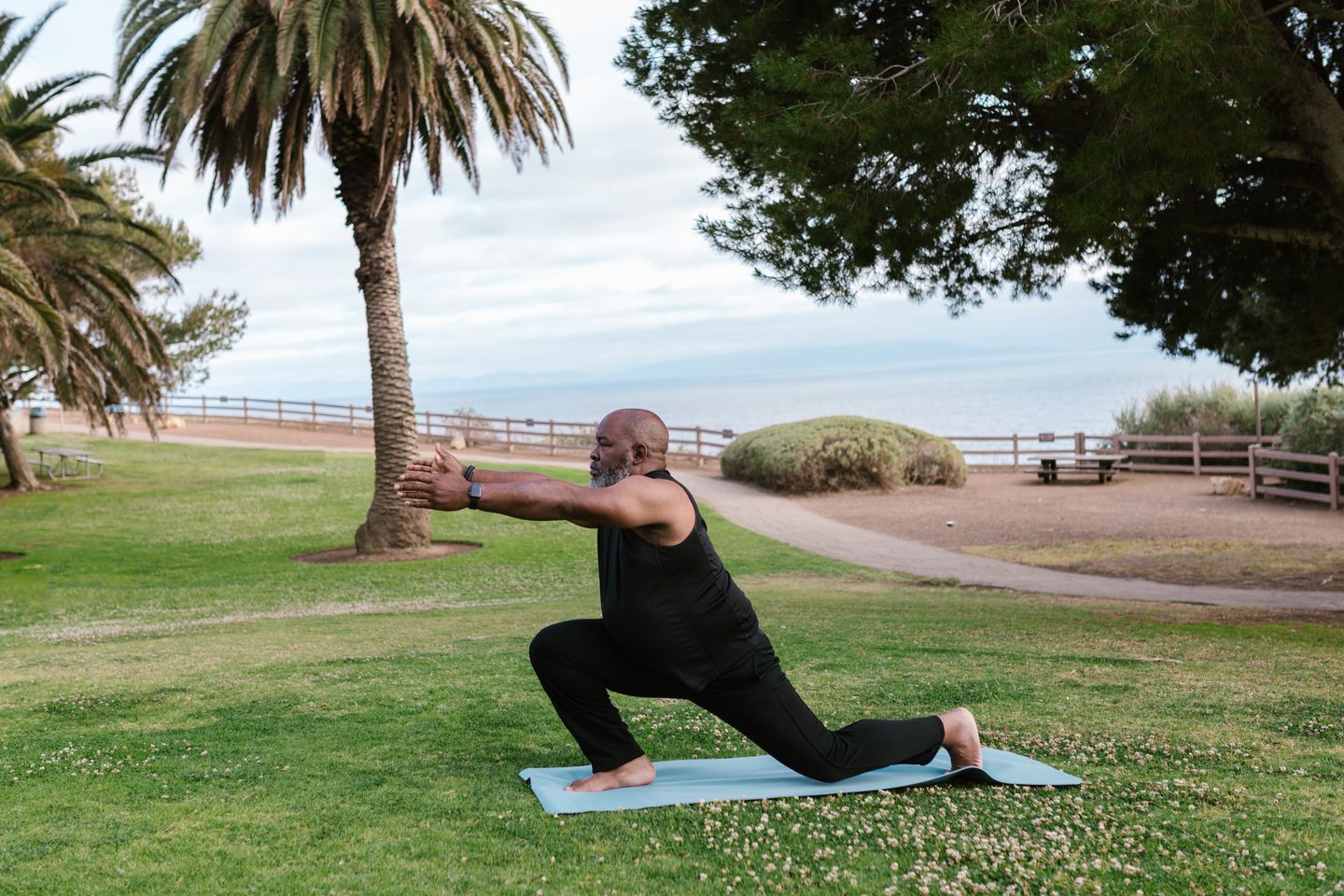
Begin with two or three positions you know well, such as sitting and hands and knees. A familiar route leaves attention available for the spaces between shapes.
Arrange any supports before starting. Notice where a hand might land and whether a blanket edge could catch your foot. Consider how you will leave each position, too. A comfortable entrance does not automatically make the return journey equally straightforward.
Pause before changing shape
Before moving, let yourself register your current position. Feel where your weight rests and look toward the surface you will use next. This short pause is a practical check: are your hands free, is the floor clear, and do you want to continue?
Let breathing remain ordinary while you decide. There is no requirement to match every movement to a count or a particular breath. If coordinating them feels complicated, move at a manageable pace and leave the breathing alone. Comfortable movement takes priority over an elegant rhythm.
Move in smaller stages
Instead of shifting your whole body at once, separate the transition into simple actions. Place a hand, redistribute your weight, then move a leg. Use a sturdy support when helpful. Small stages give you places to stop and reconsider without needing to complete the original plan.
If you find yourself rushing through a difficult part, change the route. You might turn to one side before standing or use a chair to help you rise. Keep the movement within your usual abilities, and stop if it brings pain or an unsettling sensation.
Arrive before continuing
Once you reach the next position, allow a moment to settle. Adjust your hands, cushion, or foot placement before adding another movement. Notice whether the position feels usable today. Returning to a familiar seat is a valid next step, even if your plan included something else.
Repeat the route once or twice if you wish. Ask which stage felt clear and which needed room. A better hand placement may be more useful than a longer practice.
A few common questions
Must every transition be very slow?
No. Choose a manageable pace. Extremely slow movement can feel more demanding; move naturally and pause where useful.
What if I forget the sequence?
Return to a comfortable position and simplify. Two familiar positions are enough. Keep any written reminder easy to see.
Published by the Soranoka journal.